
I’m a firm believer that Artificial Intelligence (AI) will never completely replace the human golf coach.
The empathy, the chemistry, and the hands-on intuition remains the heartbeat of what I do as a PGA and LPGA Master Professional in Instruction.
Since 2006, video analysis has been a staple in my instruction, and I’ve long relied on Onform as the platform to analyze my students’ progress, provide remote coaching and facilitate coach-athlete communication.
But in the last few years, we’ve entered a new frontier.
“If you’re a coach and you’re not using AI yet, I’ll be candid: you’re already behind.”
For me, AI isn’t about replacing the coach. It’s about becoming a “smarter” messenger, streamlining the tedious admin work, and gaining back hours of my life to focus on what matters most — my students as a professional and my family from a personal perspective.
Onform and ChatGPT: The Centerpiece of My Modern Workflow
In my daily practice, Onform is the absolute hub of the instructor-student relationship. It is the primary mode of communication where I stay connected with my athletes between sessions.
However, the true magic happens when I pair the visual data from Onform with Large Language Models (LLMs) such as ChatGPT.
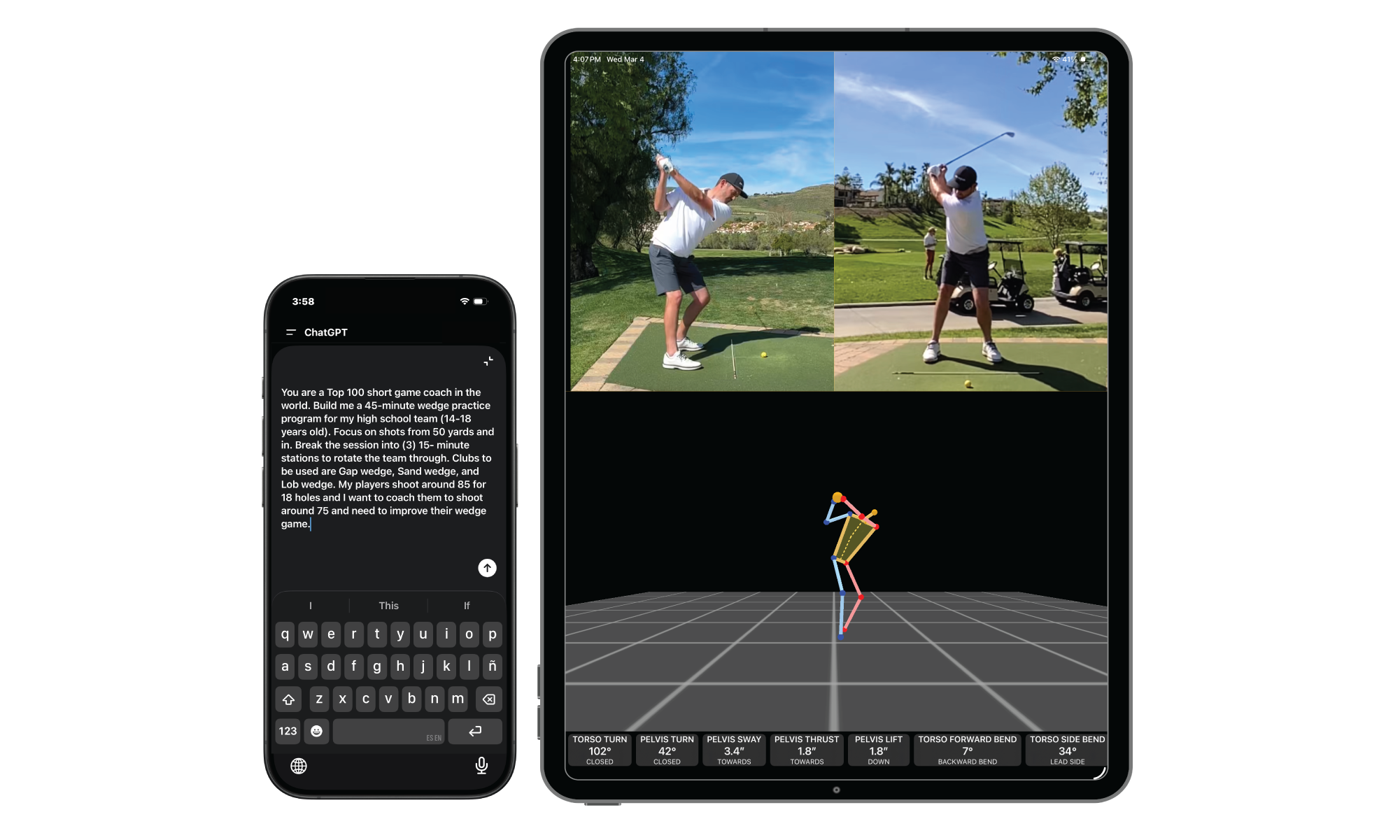
I’ve spent the last three years “teaching” ChatGPT my specific methodology. I’ve uploaded my manuscripts, PowerPoint presentations, and specific drill sets so that it understands my “voice” and my prescriptive philosophy.
When I encounter a student struggling with a complex power leak or a persistent “slide and sway,” I don’t just Google a generic fix. I use the metrics captured in Onform and feed those insights into my trained AI model.
I can ask:
“Based on my teaching files, what are the top three drills I use to correct a lead-side sway for a high-handicapped player?”
Instantly, I have a clear-cut plan that is 100% me in style but generated in seconds. This allows me to move from diagnosis to prescription without the friction of manual searching.
Reclaiming the ‘Unpaid Hours’ Through Intelligent Planning
Every coach knows about “unpaid hours” — the time spent at home on a laptop after a long day on the range — drafting practice plans and summer programs. This is where AI has become my greatest administrative ally.
Take the example of an elite high school student needing a three-month summer program. In the past, that meant an hour of manual work. I’d use a Word document to create a calendar with text boxes outlining different drills. Now, I simply upload a previous successful program to ChatGPT and say:
“Based on this template, create a June-August program for a student working on clubface control. They practice four days a week for two hours. Include specific drill quantities and rest intervals.”
What used to take an hour now takes 10 minutes. I get 50 minutes of my life back to spend with my family, and the student gets a professional, personalized blueprint for their training.
The key, however, is oversight. I never just copy and paste. I review every output to ensure the language feels authentic and personal and the prescription is accurate and optimal based on my methodology.
AI builds the skeleton, and I provide the quality control and human touch.
Practical Application: Using AI in Practice Plan Creation
Whether you’re using ChatGPT, Claude, Gemini or another LLM, one thing holds true — the result is only as good as the inputted prompts.
Here’s an example of a detailed prompt I used with my trained ChatGPT profile. Notice how prescriptive it is, with clear parameters on what I want the final result to look like.
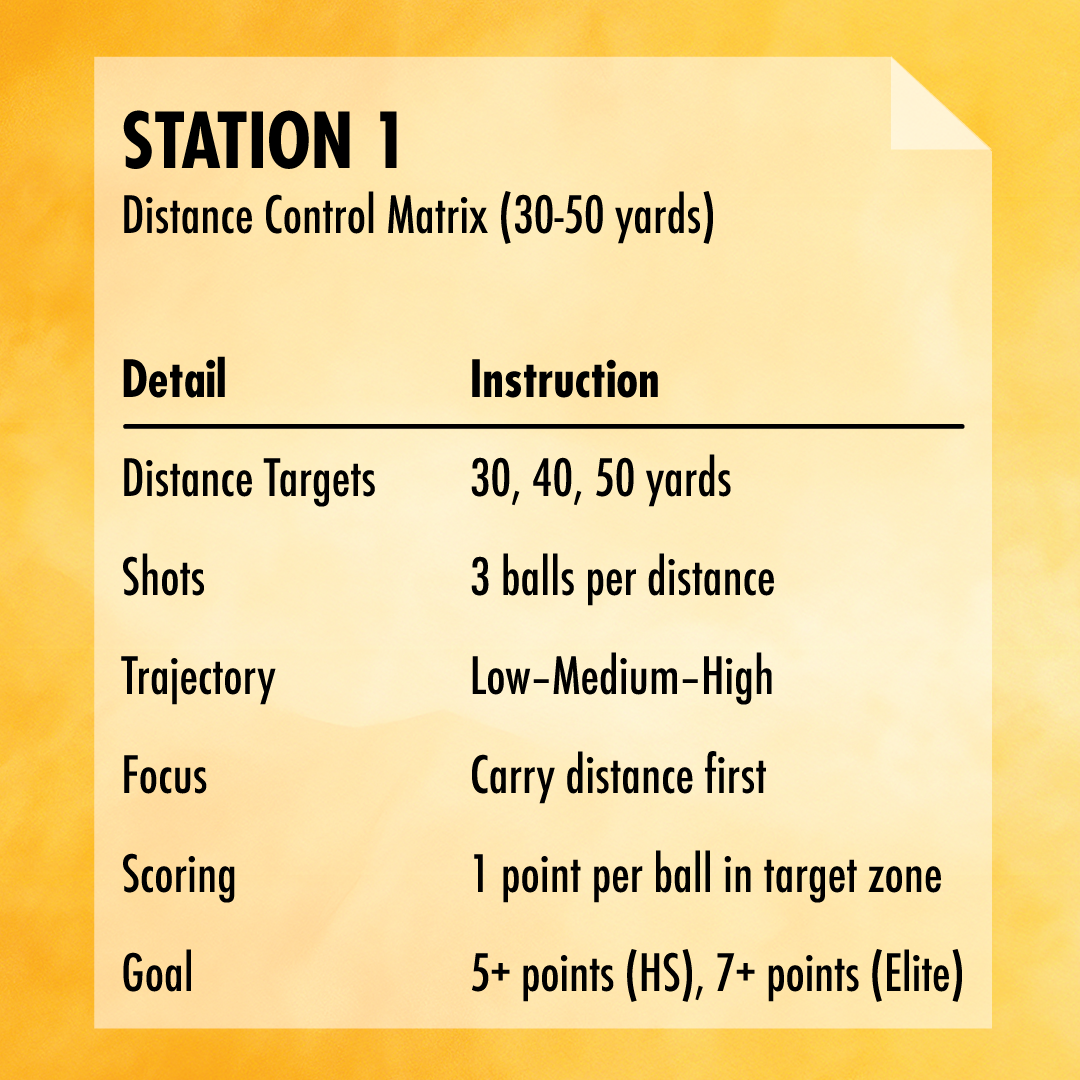
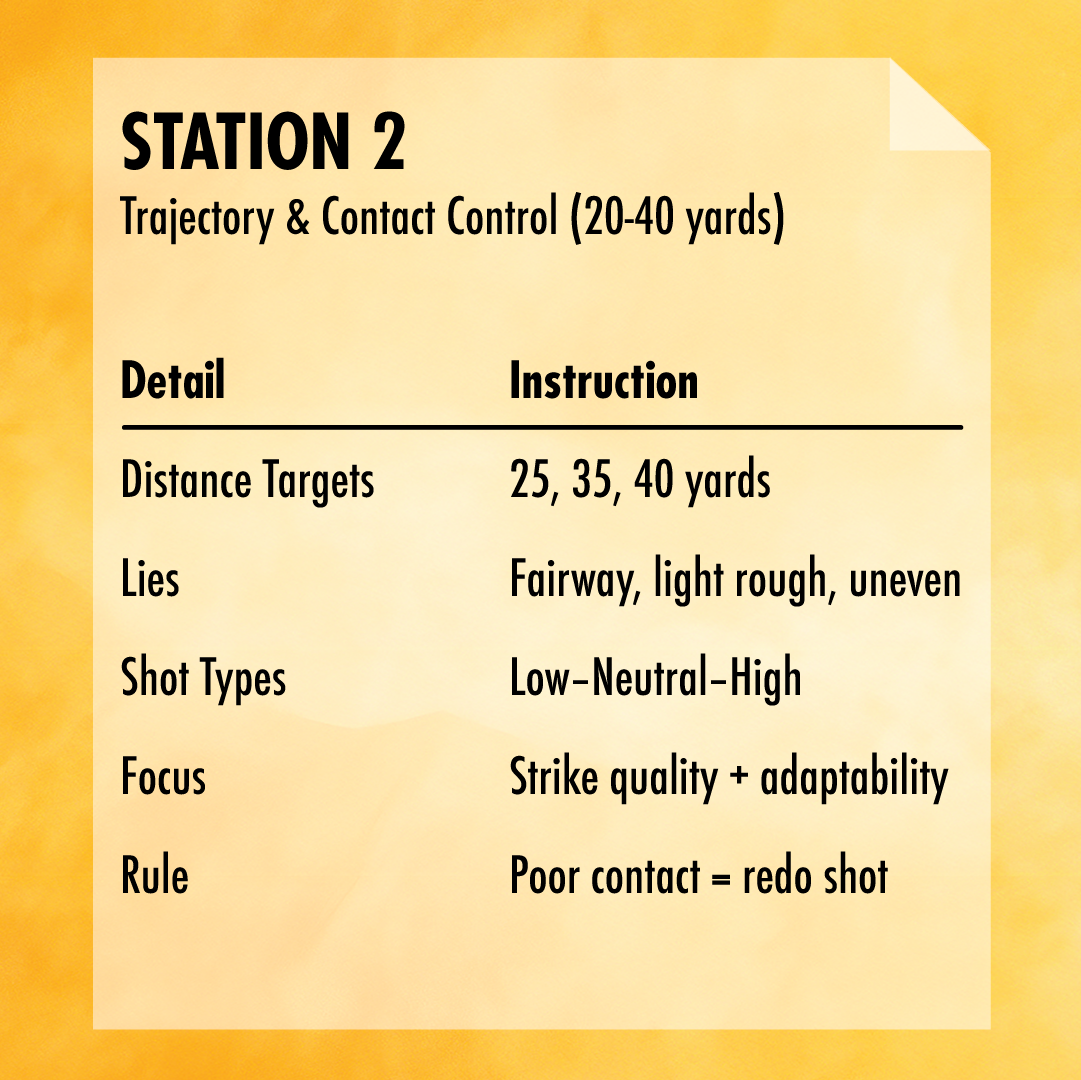
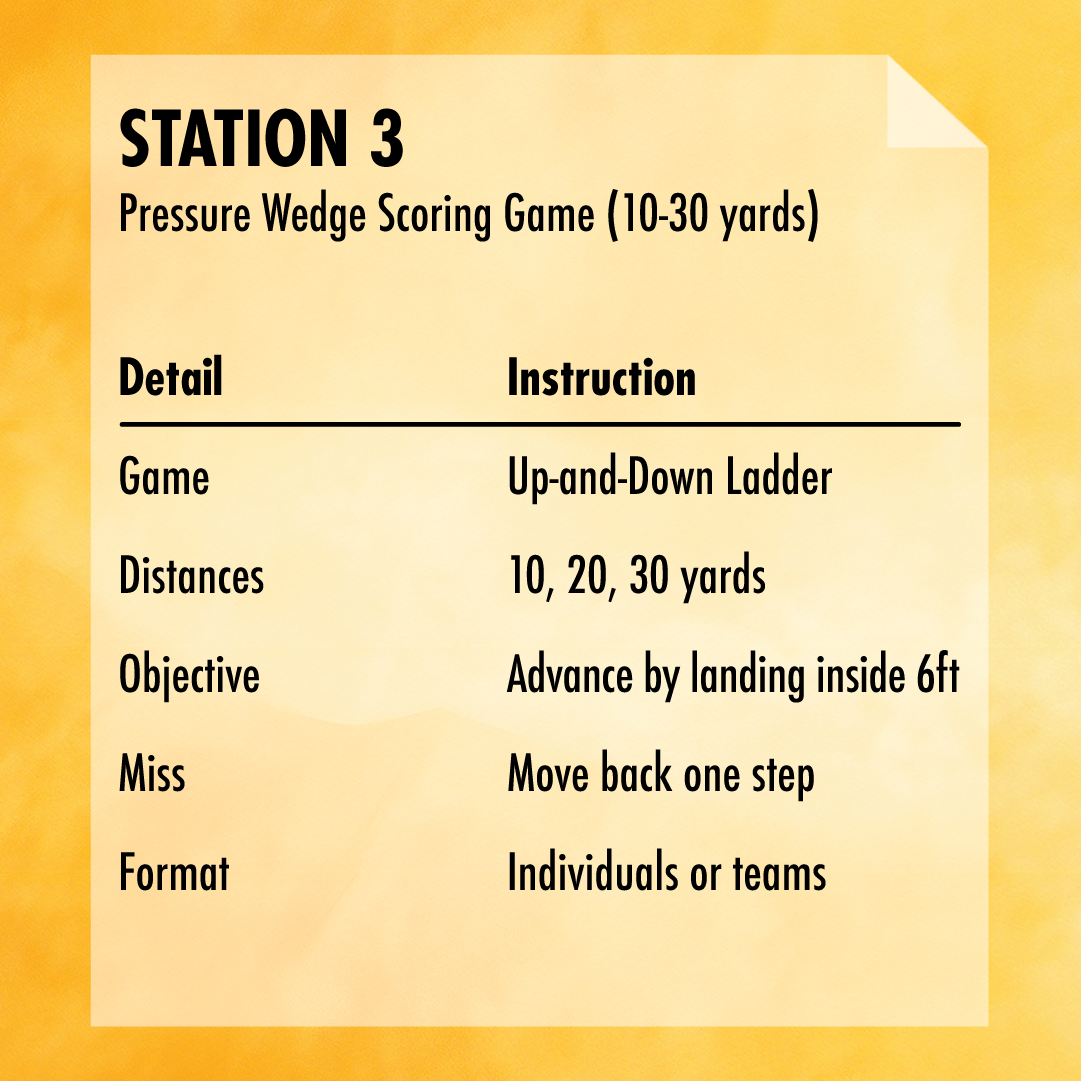
“You are a Top 100 short game coach in the world. Build me a 45-minute wedge practice program for my high school team (14-18 years old). Focus on shots from 50 yards and in. Break the session into (3) 15- minute stations to rotate the team through. Clubs to be used are Gap wedge, Sand wedge, and Lob wedge. My players shoot around 85 for 18 holes and I want to coach them to shoot around 75 and need to improve their wedge game.”
That level of detail ensures the structure follows my preference, but my methodology and library of drills I’ve used to train the LLM guides it to populate the plan with training sessions that I would prescribe manually. Here’s the result:
The Path Toward an All-in-One Coaching Ecosystem
As we look ahead, the potential for AI in golf is limitless. My dream is a fully integrated ecosystem where the friction between tools disappears.
Currently, I use a variety of tools: Onform for the foundation, ChatGPT for text and planning, and platforms like Canva AI or OpusClip for social media content production.
While effective, the next evolution will be an all-in-one package. Imagine a platform where:
- The video is recorded.
- AI automatically identifies the swing flaws and suggests drills from my own library.
- The system pulls out the three most “viral-worthy” moments from the lesson.
- It drafts the social media captions and hashtags for me.
AI Isn’t Replacing Human Coaching, It’s Enhancing It
To the skeptics who fear AI might replace them: remember that information is only as good as the messenger.
A high-handicap golfer can read about bowing the lead wrist, but they need a coach to help them feel it and implement it.
AI won’t replace the coach, but the coach who leverages AI will likely replace the one who doesn’t.
Jump in, find a tool that fits your rhythm, and see how much more you can give to your students when you aren’t bogged down by the busy work.

Author Bio
Dr. Alison Curdt is a PGA Master Professional in Instruction, LPGA Master Professional, and one of Golf Digest’s Top 50 Teachers in America. She has leveraged video analysis technology within her coaching since 2006 and has embraced artificial intelligence, using it to streamline the tedious admin work of her coaching business.