
I started coaching pole vault back in 1990, and almost immediately, I was hooked. For nearly three decades, coaching was something I balanced alongside a full-time career in construction, working as a pipe fitter and welder.
In 2018, I retired from construction to dedicate myself full-time to coaching as the Head Vault Coach at Austin Pole Vault and Throws.
Our facility primarily serves local high school athletes from around the Austin, Texas metro area as well as across Texas. Specialized field events such as pole vault require dedicated facilities, equipment, and coaching infrastructure that many high schools simply cannot support. Being able to provide that environment is something I take a lot of pride in.
Looking back, the evolution of coaching technology over my nearly 40-year career has been incredible. I’ve used video in my coaching basically since day one. Back in the 1990s, that meant hauling around a bulky VHS tape deck and a massive shoulder-mounted camera.
Batteries didn’t last long, VHS tapes wore out, and you couldn’t see a thing through those tiny viewfinders. You had to wait until practice was over, walk inside and pop the tape into a monitor just to see what happened.
Transitioning from those VHS tape decks to modern digital video analysis on Onform has completely transformed how I coach in real time.
Bridging the Gap Between ‘Feel’ and ‘Real’ for Pole Vaulters
The most important part of video analysis is closing the gap between what an athlete feels they are doing versus what is actually happening.
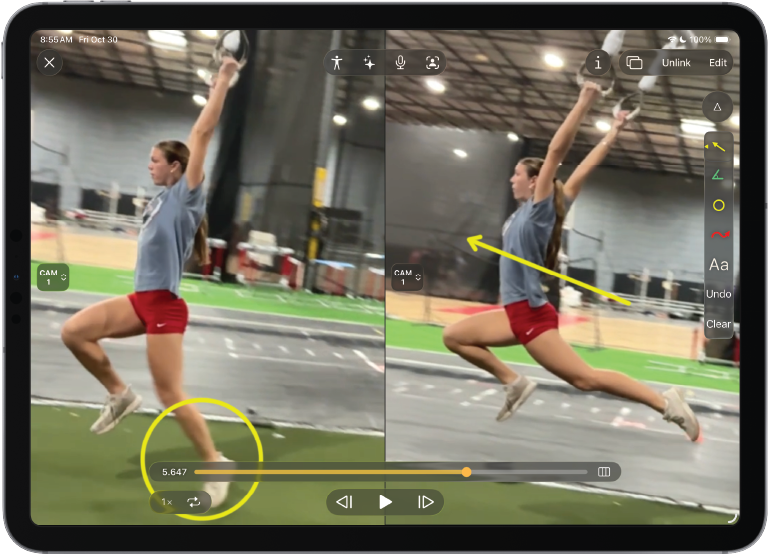
Vaulters will frequently look at me and say, “I felt like I was doing exactly what we talked about!” But when we pull up the footage in the Onform app on my iPad, they see right away that their hands need to push a bit more or their trail leg needs to stay extended longer.
Seeing those three or four repetitions on video helps them recognize the breakdown so we can correct it before it becomes an ingrained habit.
Side-by-side, split-screen comparisons are my favorite tool on the Onform platform. I love importing the side-by-side footage of world-class vaulters — like world record holder Armand “Mondo” Duplantis or Emmanouil “Manolo” Karalis — to help my athletes visualize high-level mechanics.
Manolo has this massive, wide-open takeoff and long swing that is amazing to watch. While those positions might exceed my high schoolers’ current physical capabilities, visualizing that big, open takeoff helps them understand how to set up their swing.
In fact, I keep an entire library of elite female vaulters saved for my high school boys to study, because those women jump higher than most of those boys while executing near-flawless mechanics. My guys learn an immense amount about technical efficiency by emulating them.
We also use video to isolate specific mechanics during off-runway drills:
- Slide Box Drills and Speed Timers: To help vaulters overcome the mental block of slowing down right before the plant box, we set up a slide box runway. By putting a timer on side-by-side clips of their slide-box runs and full runway vaults, I can prove to them that their running speed and timing are identical, giving them the confidence to attack the box and move up to bigger poles.
- Gymnastic Ring Work: We use gymnastics rings to replicate the takeoff and swinging motion around the shoulders. I can record them on the rings, show them their hand positions, and transition straight to the pit so they can trust the same movement pattern on the pole.
- Granular Diagnostics: Zooming in on close-ups allows us to catch subtle details human eyes miss in real time — like whether an athlete is closing or blinking their eyes during the plant. If an athlete is struggling at the plant, I can stand near the back of the pit, zoom directly in on their face, and diagnose whether they are keeping their eyes open for safety and confidence.
Modern Multi-Pit Event Operations and Remote Coaching
Beyond daily practice, modern video tools have revolutionized how we manage competitions. At major multi-pit events like the Pole Vault Summit in Reno, Nevada — which features 15 pits running simultaneously inside an arena — running back and forth capturing all my athletes isn’t just taxing on my body, it’s physically impossible.
Instead, I deploy multiple iPads with athletes stationed across different pits. Jumps recorded on those iPads send video right back to my central iPad. I can review the attempt, use predictive text to quickly type out technical shorthand — such as “move standards to 60” or “back up 6 inches,” — and attach it directly to the video replay for the athlete to read instantly.
This capability even unlocked full remote coaching. When my wife broke her knee and I couldn’t travel down to a competition in Port Aransas, Texas, our athletes took the iPads down to the meet while I coached all 40 of them directly from my couch.
It’s also opened up remote access for families. Parents who are working or grandparents who struggle with the heat can stay home, track live scores on an online results app, and instantly flip over to Onform to watch full video replays of every jump. It functions almost like a personalized live sports broadcast.
Team Culture, Social Engagement, and Athlete Rest
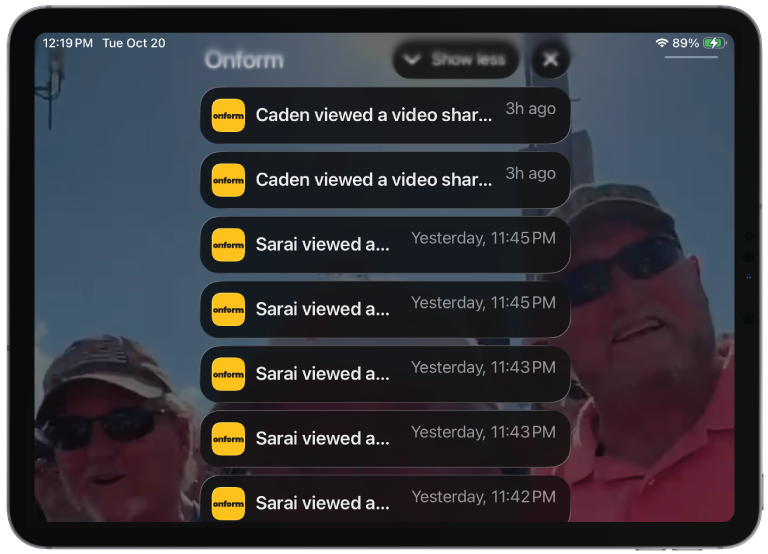
Using a shared video platform has created an awesome social dynamic and peer accountability among our athletes. When athletes are home, they receive app notifications whenever a teammate posts a practice jump.
They’ll watch each other’s clips, text back and forth, and poke fun at minor mistakes or celebrate big PRs together. It builds a team camaraderie even when they aren’t training in the building at the same time.
However, having instant access to video library archives comes with one unexpected coaching responsibility: monitoring late-night film review.
My phone notifications regularly go off late at night, and I’ll notice athletes logging in at 2:30 a.m. to analyze their practice jumps. While I love seeing their dedication, I have to step in as a coach the next morning and remind them to get some sleep, especially if they have a competition the next day.
Simple Tools, Serious Results
Before making the switch to Onform, I used Coach’s Eye for years. Onform has been a major upgrade in simplicity, cloud management, and reliability.
On top of the app features, having accessible customer support — where real people walk you through setup questions — makes a world of difference for coaches managing busy facilities like Austin Pole Vault and Throws.
At the end of the day, technology doesn’t replace authentic, hands-on coaching. But when used correctly, video analysis bridges the gap between perception and reality, accelerates mechanical breakdown, builds athlete confidence, and keeps our vault community connected on and off the runway.
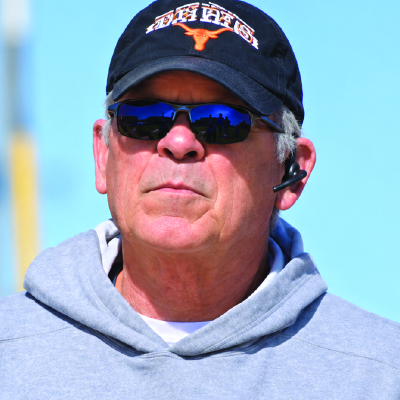
Brian Elmore is the Head Coach Pole Vault Coach at Austin Pole Vault and Throws in Texas. With nearly 40 years of experience, has long incorporated technology into his coaching. Since joining Austin Pole Vault in 2018, he’s produced more than 40 college athletes, including the first University of Texas female Big 12 pole vault champion. Brian uses Onform to not only analyze his athletes’ performance, but also provide remote coaching, athlete accountability and a resource for parents to stay informed on how their athletes are doing.