
In the world of professional golf, few names carry as much weight in the short game as Phil Kenyon.
As the founder and owner of UK-based Phil Kenyon Putting Academy and coach to some of the world’s most elite players such as Scotty Scheffler and Justin Rose, Kenyon has dedicated his career to the minutiae of the putting stroke.
Central to his modern coaching philosophy is the integration of video analysis to bridge the gap between expert instruction and athlete performance.
“I’ve always been a big believer that you need to try and quantify your work,” Kenyon explains. “You need to truly appreciate what the player is actually doing and be able to measure the player, build a picture of what that player is truly doing, and understand it. It’s the stuff that you don’t see with your naked eye.”
For Kenyon and his team, including academy coach Lee Sullivan, video analysis isn’t just an accessory, it is an essential diagnostic tool.
“It’s nice to get a second pair of eyes,” Sullivan said. “It gives me the information to make an informed decision of how I am going to help a particular player or where I am going to start.”
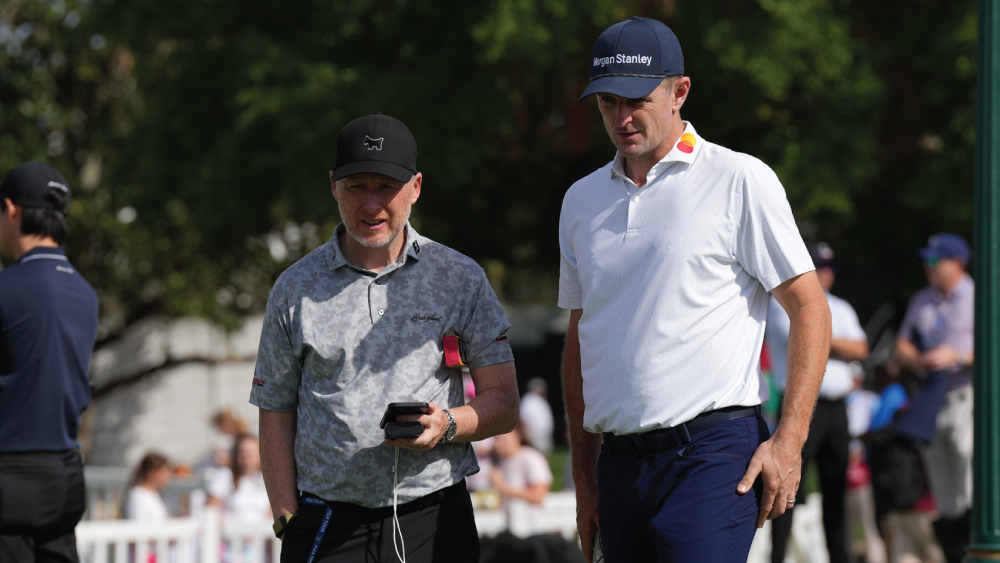
Kenyon, Sullivan and other coaches at the Phil Kenyon Putting Academy utilize Onform for video analysis of their athletes on greens around the world — from mid-handicap age groupers to PGA tour pros such as Tommy Fleetwood, Russell Henley, Keegan Bradley, Rose and Scheffler.
Leveraging Video Analysis to Diagnose Putting Issues
While the full swing often gets the most attention in video analysis and other emerging technologies, Kenyon argues that video is arguably more important for putting due to the precision required.
It’s a lot smaller movements, so you need to be more precise, and there’s a lot that even an experienced coach may miss at first glance. Onform allows Kenyon to record his pro golfers on tour on the practice greens before events for on-the-fly adjustments.
“The ability to record a stroke and then play it back again and again is invaluable. It allows us to look at the minutiae of how the body and the putter is moving. There’s features within Onform that lend itself really well to being able to sort of diagnose certain issues.”
Sullivan highlights a specific hierarchy of skills they address at the academy:
- The Start Line: The ability to start the ball consistently on the intended line.
- Speed Control: Mastering the pace of the putt.
- Green Reading: Correcting the perception of the break.
Sullivan emphasizes that the start line is the foundation because poor mechanics there can skew everything else.
“If you struggle to start the ball on line, that potentially is going to affect the way you read greens because you’re never seeing the ball traveling on the correct line,” Sullivan explains.
To diagnose these issues, Sullivan relies heavily on what he calls Onform’s “blend” feature. This allows him to overlay two videos — often a student’s setup and their actual stroke impact — to create a shadowing effect.
“Blending from setup to impact reveals quite a bit with certain players and can help determine the root cause of any problem,” Sullivan said. “For example, using the blend could show a player moving into their heels between set up and impact. This could be the reason why the putter is being displaced away from the target line and they are hitting it out of the toe. Often they wouldn’t see this with their own naked eye or awareness.”
These conversations are common among Sullivan’s students, and the easy-to-follow playback with technique overlays in Onform allows his athletes to clearly visualize what needs to be corrected.
The ‘Scottie Scheffler Effect’: Simplifying the Path to Greatness
One of the most high-profile success stories in recent years is Kenyon’s work with the world’s top-ranked golfer, Scottie Scheffler. While Scheffler’s ball-striking has long been legendary, his putting was once under intense scrutiny. Since Kenyon began working with him roughly two years ago, that narrative has shifted dramatically.
According to Kenyon, the improvement wasn’t about a radical overhaul but rather about providing the “phenomenal athlete” with clarity and simplicity.
“He’s just getting a little bit more clarity specific to him, his needs, tapping into his intuition a lot more potentially than what he was,” Kenyon notes.
Key changes included simplifying Scheffler’s green reading and a pivotal grip change that Kenyon believes was “really big for him,” especially inside of 10 feet.
Kenyon sees his role as creating the right environment for Scheffler to flourish. By using tools like Onform to demonstrate corrected movements, Kenyon can provide the visual proof an athlete needs to commit to a change.
“When you can show them, you capture their interest, and then obviously when you can show them a corrected move, it’s great for confidence and their understanding that, ‘okay, that’s what I need to do,’”
Remote Coaching and the Future of Putting Analysis
The Phil Kenyon Putting Academy has embraced a hybrid model, using Onform to maintain a constant connection with students worldwide.
Whether it’s Kenyon sending video analysis recordings to tour pros like Matt Fitzpatrick or Sullivan checking in with college players in the U.S., the platform serves as a vital communication bridge.
“Nothing takes the place of one-to-one coaching, but without having remote coaching, you’re going to lose contact with players and important information,” Sullivan said.
The ability to record an “analysis overlay” — where a coach draws lines and provides voiceover commentary on a student’s video — ensures that the intended message is never lost in translation.
“I have several students playing in college in the U.S. and some female students on the pro tour, so to have the ability for them to record their putting on their phone from events or during practice and I’m able to see it and provide almost immediate feedback is really beneficial,” Sullivan said. “It’s the next best thing to being there with them.”
While the academy has not yet embraced Onform’s new 3D modeling feature for golf, Sullivan is excited for what the future will bring in terms of putting analysis.
“The prospect of being able to track and analyze the finer details such as wrist and hand conditions without the need for physical sensors would be really interesting,” Sullivan said.