
Guest post by Dr. Alison Curdt, PGA & LPGA Master Professional and founder of Alison Curdt Golf
As a nationally recognized golf professional, I’ve spent years refining my teaching methods, blending tradition with innovation to help players of all skill levels improve their game. One tool that has become indispensable in my coaching arsenal is Onform, a cutting-edge video analysis app. Among its many features, the skeleton tool has proven particularly effective in addressing one of the most common swing faults in golf: the dreaded flip at impact.
For those unfamiliar, a flip occurs when the clubhead passes the hands at impact, leading to inconsistent strikes, a loss of power, and often an undesirable high ball flight. Thankfully, video analysis and the skeleton tool provide actionable insights that help golfers identify, understand, and correct this issue.
Diagnosing a Flip at Impact
Often, golfers are unaware they’re flipping the club since the motion happens in milliseconds. Video analysis is essential for diagnosing a flip, and Onform makes this process seamless by allowing me to:
- Capture high-speed video.
- Freeze-frame critical moments.
- Replay swings in slow motion.
- Zoom in on specific phases of the swing, particularly the impact position.
3 Checkpoints for Assessing a Flip
- Setup Position: Is the golfer in an athletic posture with their hands slightly ahead of the ball?
- Transition and Downswing: Are the wrists maintaining a proper hinge as the club approaches impact while the pelvis and torso lead the charge?
- Impact: Are the hands leading the clubhead, or has a part of the body slowed down, causing the flip?
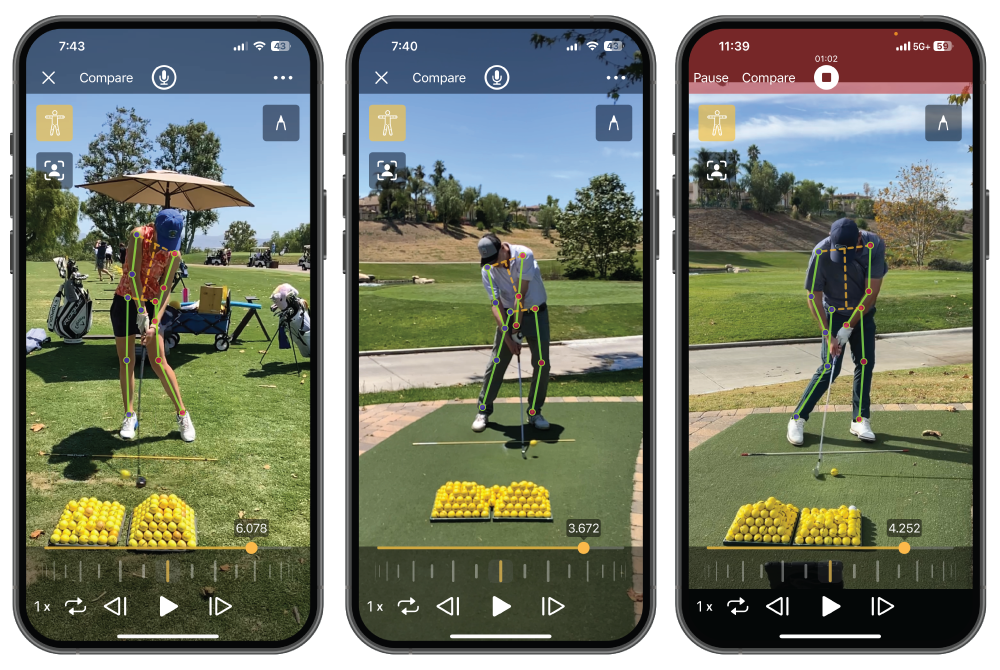
How The Skeleton Tool Helps
With Onform’s skeleton tool, I overlay a digital representation of the golfer’s body onto their swing video. This highlights joint positions and movements, offering a precise visualization of key elements like:
- Wrist angles
- Hand paths
- Body rotation
Seeing these skeletal visuals alongside the video footage brings clarity to the problem, helping players better understand their movement patterns.
Correcting the Flip
Once the flip is identified, the real work begins. I use Onform’s features, including the skeleton tool, to implement a structured plan:
- Build Awareness
I show the golfer their swing video and highlight the flipping motion with the skeleton overlay. Pointing out how the hands and clubhead interact at impact helps them see where their mechanics are breaking down. Side-by-side comparisons with professional models illustrate the ideal impact position, showing how the hands should lead the clubhead with a stable lead wrist and forward shaft lean, complemented by proper body rotation. - Set Achievable Goals
With Onform, I annotate videos, draw lines to indicate where the hands and club should be, and set checkpoints for future practice.Common goals for fixing a flip include:- Maintaining a flat lead wrist through impact
- Improving body rotation sequencing to lead with larger muscles
- Developing a consistent hand path to promote proper clubhead lag
- Drills to Correct the Flip
Correcting a flip requires a combination of drills and immediate feedback. Here are three I recommend:- Impact Bag Drill: Using an impact bag, practice delivering the clubhead with hands leading while maintaining a flat lead wrist. The skeleton tool tracks joint alignment for proper body mechanics.
- Lag and Hold Drill: Pause halfway down in the swing to feel the lag, then slowly deliver the club, focusing on keeping hands ahead of the clubhead. Recording this drill with Onform helps see the improvements in wrist angles and hand position.
- Alignment Stick Drill: Place an alignment stick along the grip of the club. If the wrists break down, the stick will strike the golfer’s side, providing immediate feedback. The skeleton tool illustrates how proper rotation affects the swing.
Building Long-Term Improvement
My goal is to provide students with the tools and knowledge to take ownership of their game. Onform, especially its skeleton tool, helps golfers to understand their swings on a deeper level. By addressing flaws like flipping with precision and clarity, players can build a foundation for long-term improvement.
Whether you’re a weekend golfer or an aspiring pro, embracing video analysis and innovative tools like Onform can transform your swing. The flip at impact is no match for a clear plan, informed coaching, and a commitment to progress.

Dr. Alison Curdt is a PGA Master Professional in Instruction, an LPGA Master Professional, and a Golf Digest Top 50 Teacher in America. She was one of only nine women to achieve the highest PGA credential earned by an instructor and one of just two women to be a dual Master Professional in both organizations. With over two decades of coaching experience, Dr. Alison combines her expertise in golf instruction with a unique approach rooted in sports psychology, helping players improve both their physical and mental games. She holds a Doctorate in Clinical Psychology and specializes in integrating mental performance strategies to enhance her students’ on-course success. Dr. Alison is a speaker, mentor, and advocate for women in golf, dedicated to growing the game and empowering players of all levels.