
When a golfer walks into a lesson, the instinct is often to chase quick fixes or obsess over aesthetic swing positions. But for Darren McLoughlin, founder of the Darren McLoughlin Golf Academy in Indonesia, long-term improvement begins with a far more diagnostic approach — one rooted firmly in the basic fundamentals of the game.
Before diving into complex biomechanics or overwhelming swing overhauls, McLoughlin focuses on what is happening at impact and whether the golfer’s foundational setup is built to last. By pairing deep diagnostic evaluation with Onform’s video analysis and communication tools, he creates a structured, accountable environment where students take true ownership of their progress.
Building a Solid Foundation Before Chasing Fixes
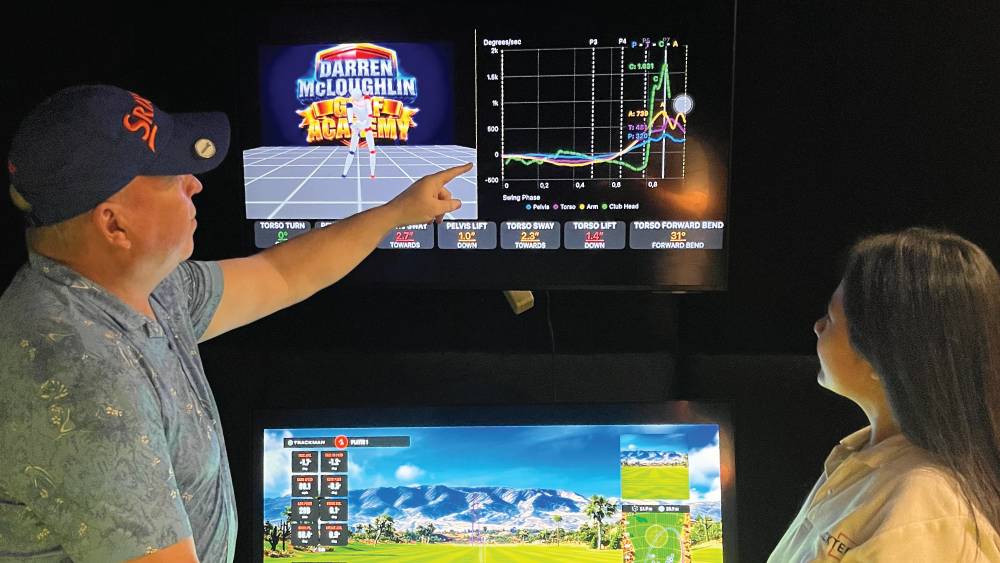
McLoughlin approaches every new student like a clinician conducting an initial diagnostic assessment. Instead of imposing a rigid, one-size-fits-all swing model, he begins by evaluating impact data — such as 3D low-point control, angle of attack, and clubhead path — to understand precisely what the ball is experiencing.
“I generally start with 3D low point,” McLoughlin explains. “I’m looking to see where the club is for the student, where it’s vertical, horizontal, in and out, toe or heel. It gives me a basis so I can see what’s actually happening at impact, and then I work back from that to see what’s actually causing it.”
Once the impact metrics are established, McLoughlin pivots directly to setup and basic mechanics, where the root causes of swing flaws almost always live. Posture, alignment, stance width, and grip are thoroughly evaluated before a student attempts to fix complex swing dynamics.
“I like to say to the students that the fundamentals are like the foundation in a house,” says McLoughlin. “If the foundation is solid, the house won’t fall.”
Uncovering Imbalances with Video Analysis
This diagnostic routine frequently uncovers underlying physical or mechanical imbalances that naked-eye observation misses. For example, McLoughlin regularly incorporates grip pressure testing into his initial screening.
He recalls working with a student who had a background in competitive badminton.
“His right-hand grip pressure was 49kg, and his left hand was 30kg — a 19kg difference because of all the flicking in badminton,” he said. “I explained to him that on the PGA Tour, players average between 55kg and 60kg in each hand, balanced. That right side was going to be completely dominant, and you can’t fix that until you understand it.”
McLoughlin avoids overwhelming golfers with an extensive list of swing corrections. He identifies the single major contributing factor behind a student’s dispersion or mis-hits and engages the student through self-assessment questions — asking them why they think a shot came off the toe or heel — before prescribing a drill.
Leveraging Onform for Accountability and Long-Term Ownership
Identifying a swing flaw in the bay is only half the battle; ensuring the student applies the fix during solo practice is where technology becomes indispensable. McLoughlin uses Onform to bridge the gap between in-person lessons and solo practice, establishing clear feedback loops and remote accountability.
While video analysis is a core component, McLoughlin is mindful of how students perceive their own movements, noting that 99.9% of the time, when people see themselves on 2D video, they hate their golf swing.
To keep feedback constructive, he frequently utilizes 3D avatars, motion tracking overlays, and targeted side-by-side comparisons to decouple emotion from movement analysis.
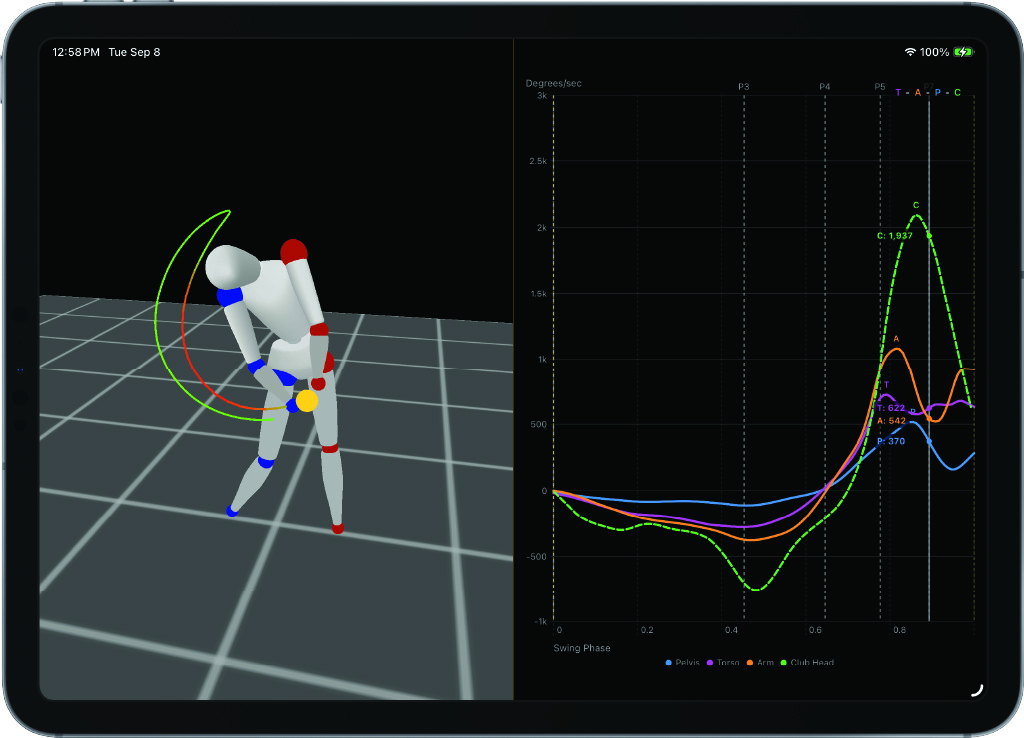
Through Onform, McLoughlin sends personalized video breakdowns, drill demonstrations, and specific practice assignments directly to the student’s device. The platform’s tracking tools allow him to verify when students have reviewed their assigned material, introducing a subtle layer of accountability.
“I basically say to all my students, ‘I’ve got the keys to the car, but I give you the car — you’ve got to drive it,’” McLoughlin says. “I’m putting a lot of onus on them. I can show you how to achieve it and what to do, but you still have to implement it.”
This ongoing connection extends beyond indoor practice bays. McLoughlin encourages students to have playing partners record their swings on the course and upload them to Onform. Comparing course movement against lesson-bay swings gives students an objective view of their progress under real playing conditions.
By combining rigorous setup fundamentals with Onform’s ongoing monitoring, McLoughlin transforms traditional golf lessons from a transactional one-hour appointment into a continuous coaching partnership.
“When you monitor students outside of lesson times, it builds stronger relationships,” McLoughlin adds. “It shows them that you’re deeply invested in their development, and that’s where real breakthroughs happen.”