
When coaching junior golfers, you quickly realize that traditional, adult-focused instruction methods rarely hit the mark. Young players are growing rapidly, their physical mobility varies wildly, and they process movement in unique ways.
Most importantly, they live in a visual world.
Throughout my coaching career, I’ve found that using modern technology like Onform isn’t just about catching swing flaws — it’s about creating clarity, establishing remote accountability, and bridging the gap between what a student thinks they are doing and what is actually happening.
Here is how I leverage video analysis, 3D motion ranges, point-of-view setup techniques, and proactive parent communication to help junior golfers build functional, lifelong golf swings.
Bridging ‘Feel vs. Real’ with Overlays and Remote Accountability
For beginner and intermediate junior athletes, the single biggest hurdle is reconciling “feel versus real.” A junior student might swear they’re turning their shoulders on an incline plane, but in reality, they’re spinning horizontally like a merry-go-round.
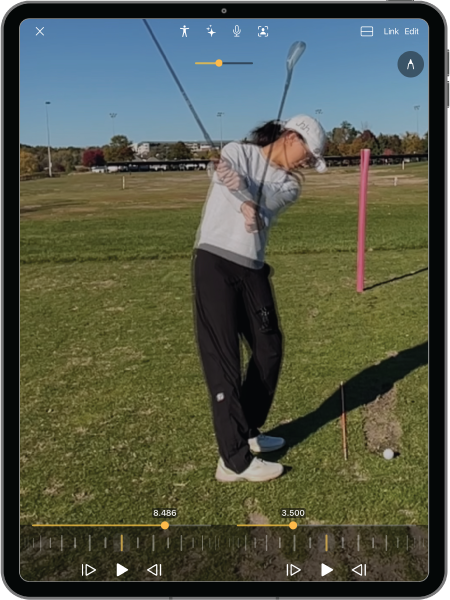
Instead of arguing with their perception, I rely heavily on Onform’s side-by-side video comparisons and direct overlays. Placing a current swing directly on top of a past frame or a proper position visual gives instant visual feedback. When a young player sees their arms cast out over the top or their lower body over-rotate, the mental lightbulb immediately turns on.
Overlays serve two primary purposes in my instruction program:
- In-Lesson Alignment: During a lesson, students often feel awkward when making a necessary adjustment. The moment I show them the overlay, they see the visual proof and embrace the change immediately.
- Progress Tracking Over Time: Saving lesson overlays across two, three, or four weeks helps us track creeping errors and confirm long-term movement patterns as their bodies grow.
Video analysis also creates a bridge of accountability outside of lesson hours. I ask my junior players to record and submit video clips of their practice sessions between lessons.
When I review their practice footage and send feedback, Onform sends me a notification when the video is opened. If a student tells me they’ve been practicing, but my app shows they haven’t opened their feedback videos, we have a constructive conversation about accountability and preparation.
Personalizing 3D Ranges Over Rigid Tour Averages
When coaching high-level, competitive juniors, a different challenge emerges: the obsession with “perfect” tour numbers. With access to 3D skeletal tracking and degrees-of-motion metrics, elite juniors often want to turn their golf swing into a beauty contest or mimic PGA Tour averages down to the exact degree.
I constantly remind my students that there is no single “golden number” in golf biomechanics — there are personalized ranges.
Tour averages can be deceiving. An average hip tilt of 12 degrees might comprise one player at 28 degrees and another at 3 degrees. Every junior golfer has unique physical capabilities, ranges of motion, and growth rates.
Here is how I determine the ideal ranges for my students:
- Physical Assessments First: Utilizing physical screens (such as TPI assessments) helps establish what a junior’s body is physically capable of doing.
- Functional Mechanics over Aesthetics: Elite juniors often possess incredible flexibility and speed. They can ring themselves out like a wet towel. Sometimes, teaching a junior to keep their feet flat on the ground and quiet their hips feels like they aren’t moving at all, even though 3D metrics prove they are rotating over 40 degrees into a perfectly functional downswing.
- Respecting Anatomy: If a junior has a limited shoulder range of motion, forcing a textbook position will cause injury or swing compensations. A “flying elbow” or non-traditional setup might actually be the most functional motion for their specific body structure.
Function will always triumph over pure aesthetics. If a swing looks like Rory McIlroy’s but the player can’t break 90 because it doesn’t fit their physical frame, the aesthetic beauty is useless.
Innovative Filming Techniques and Proactive Parent Communication
To maximize technology with junior players, coaches need to think outside the box regarding how visuals are captured and shared.
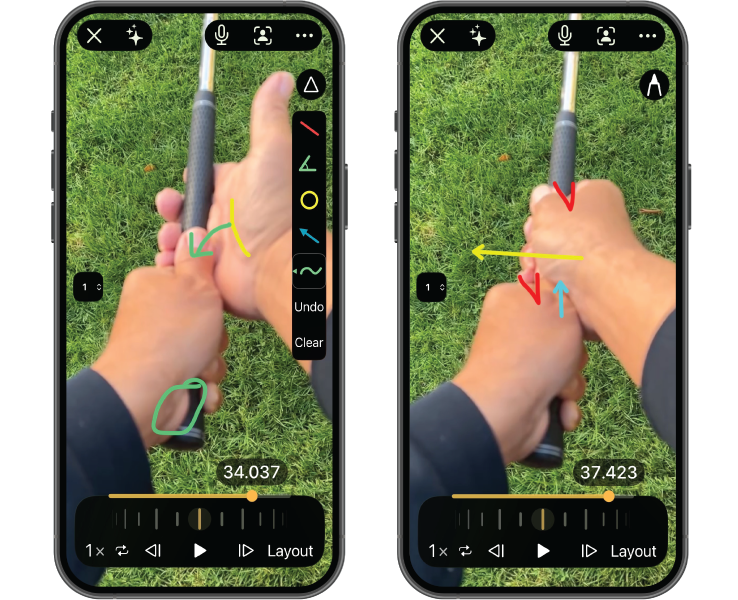
When teaching setup fundamentals like grip or ball position to young beginners, face-to-face demonstrations can be confusing. Expecting an eight-year-old to mirror your hands from across a mat creates a spatial disconnect.
To solve this, I mount my phone on a tripod or chest rig and film setup instructions directly from the student’s point of view. My hands enter the frame from behind and around the lens, showing exact left- and right-hand placement as if the student were looking down at their own hands. Watching a POV video allows juniors to mirror the technique effortlessly.
Proactive Video Libraries for Parent Communication
Managing parent expectations and maintaining clear communication is essential for any junior golf program. Instead of waiting for parent questions or equipment missteps to arise, I proactively build and distribute a pre-recorded Onform video library:
- Equipment Guidance: Before parents drop $300 on an adult driver for an eight-year-old child, I send out a video newsletter explaining swing speed requirements and the physical risks of playing with overly heavy, full-length clubs.
- Home Practice and Movement Drills: I share quick videos demonstrating foundational movement skills — like skipping or basic athletic drills — that parents can easily facilitate in the backyard.
- Daily Summer Camp Recaps: During junior camps, I upload short daily recap videos into shared team folders. When parents ask their kids in the car, “What did you do today?” and get the typical “Nothing” response, the parents can open Onform, see exact skill drills, and feel connected to their child’s progress.
By combining clear visual feedback, customized biomechanical ranges, and direct communication channels, technology transforms from a coaching accessory into the backbone of player development.
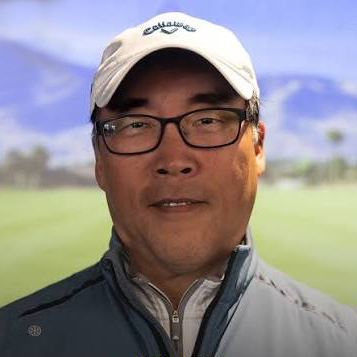
James Hong is a PGA Associate, golf instructor, and junior player development specialist based in Long Island, New York. With decades of coaching experience spanning beginners to elite competitive juniors, James leverages modern video analysis, 3D biomechanics, and personalized instruction models to build functional, resilient golf swings.